
When a sprinkler controller is not working, the first question is whether it has power. A blank display can point to a transformer, outlet, breaker, or internal controller failure. A powered display shifts the question to programming, sensor interruption, station output, wiring, and valve response.
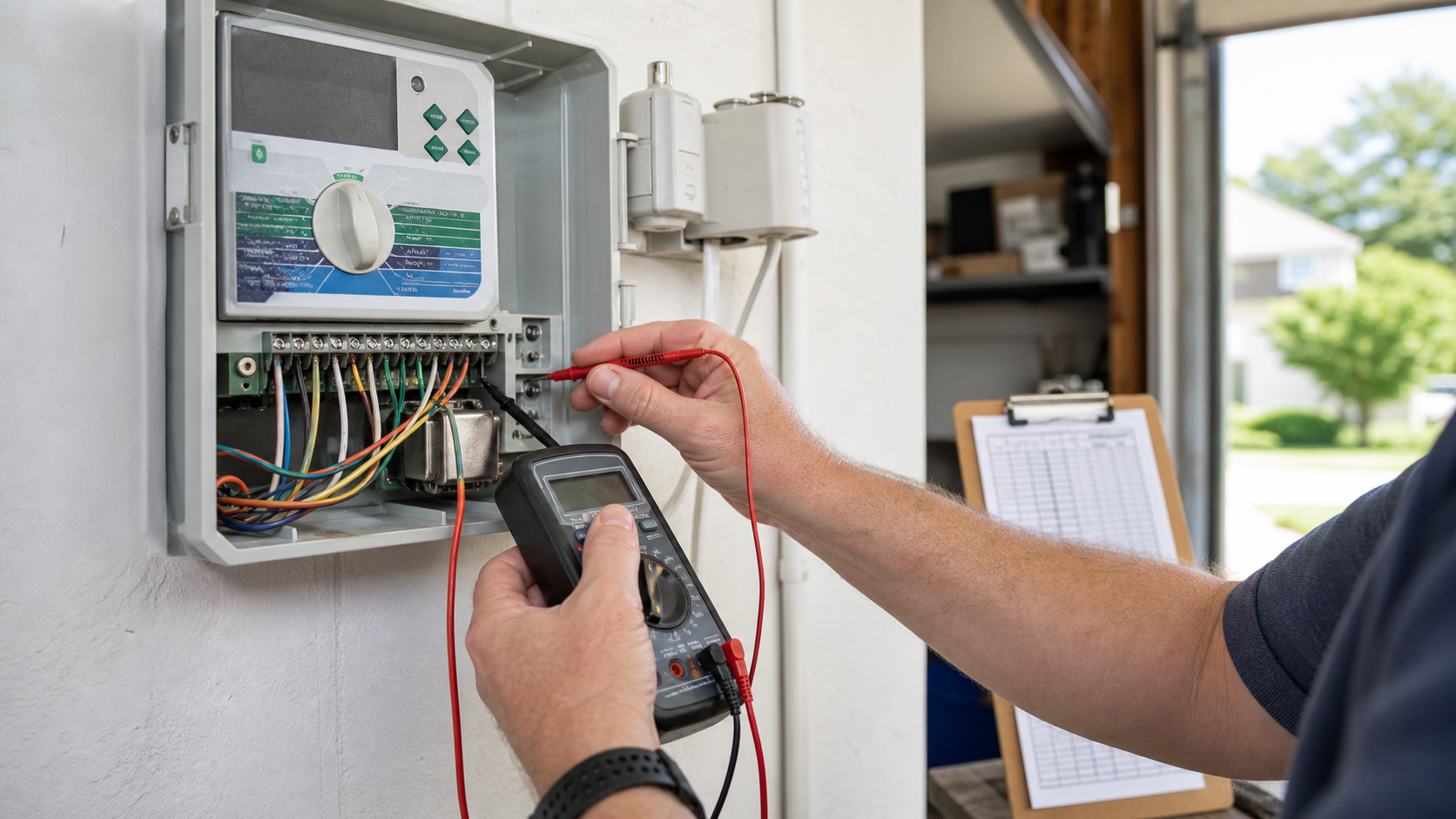
Programming issues are common after seasonal changes. A controller can have the right current time but the wrong start days. It can also have duplicate start times that make the system run more than expected. Seasonal adjustment can quietly shorten or lengthen every zone. Before digging, it is worth checking whether the schedule itself explains the symptom.
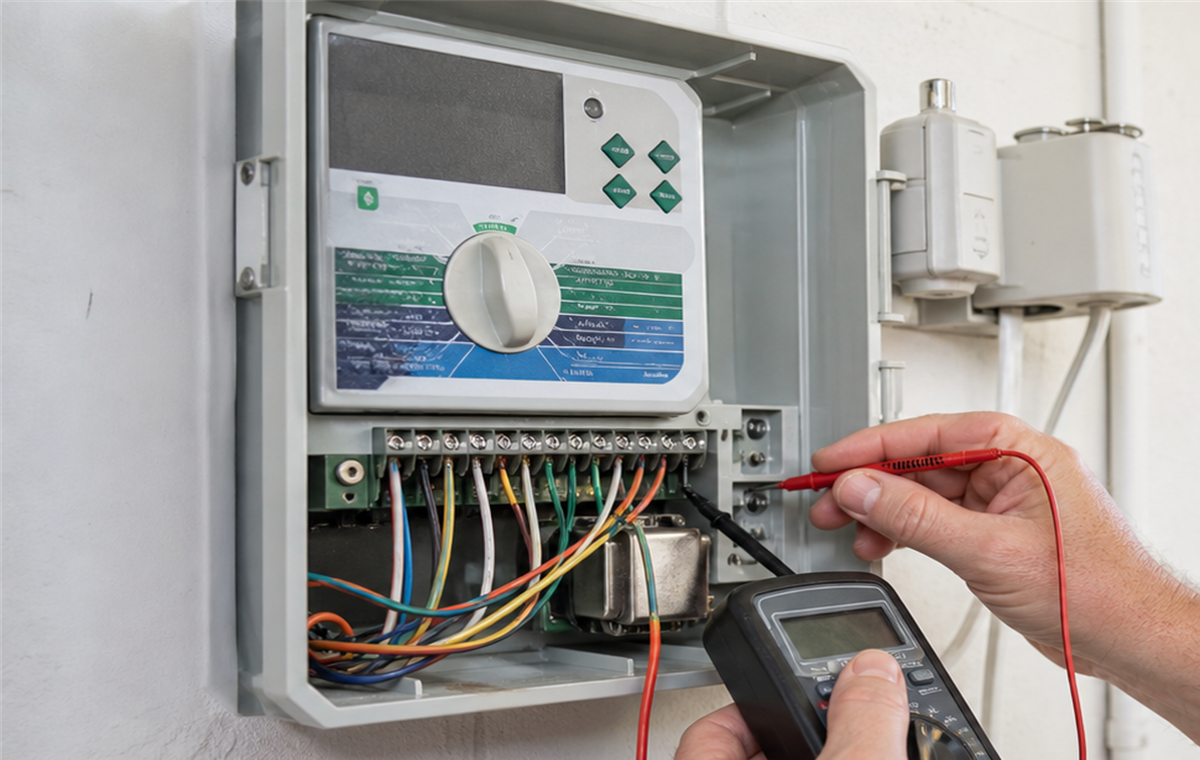
Rain sensors and weather inputs can interrupt watering even when the controller looks normal. If the sensor circuit is active, the controller may skip watering until the sensor dries or the setting is changed. That does not mean the controller is broken, but it does mean the control path needs to be checked in order.
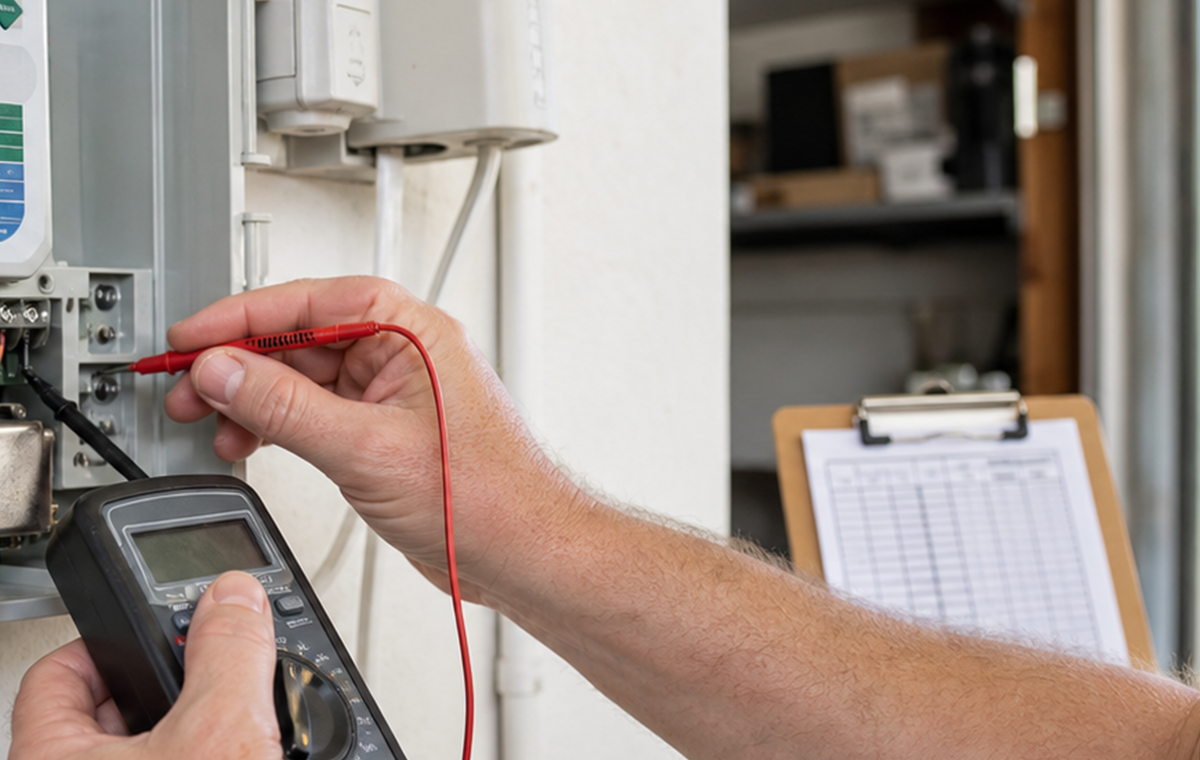
Manual station testing helps narrow the issue. If one zone runs manually from the controller, the valve, wire, and water path are likely responding. If the controller says the zone is running but nothing happens outside, the issue may be station output, wiring, solenoid, valve, water supply, or a closed shutoff.
A single failed zone often points outside the controller. Loose wire splices, damaged field wire, bad solenoids, and stuck valves can all keep one station from watering. A system-wide failure may point to power, common wire, master valve, pump relay, supply shutoff, or controller failure.
The controller can also be the cause of unwanted watering. Extra start times, overlapping programs, stuck manual run modes, and incorrect watering days can make a system run at odd hours. A careful review checks every program, not only the first screen that appears.
Homeowners can help by taking a photo of the controller display and noting which zones do not run. If the controller is in a garage or locked area, access matters. A technician may need to test voltage at the controller and then compare it to the signal at the valve box.