
A flat-yard sprinkler symptom is often easier to read. A broken head sprays in the wrong place. A cracked riser makes water bubble near the head. A weak zone shows low pressure across several heads. On a slope, water can travel before it appears, so the symptom may show up downhill from the failed part.
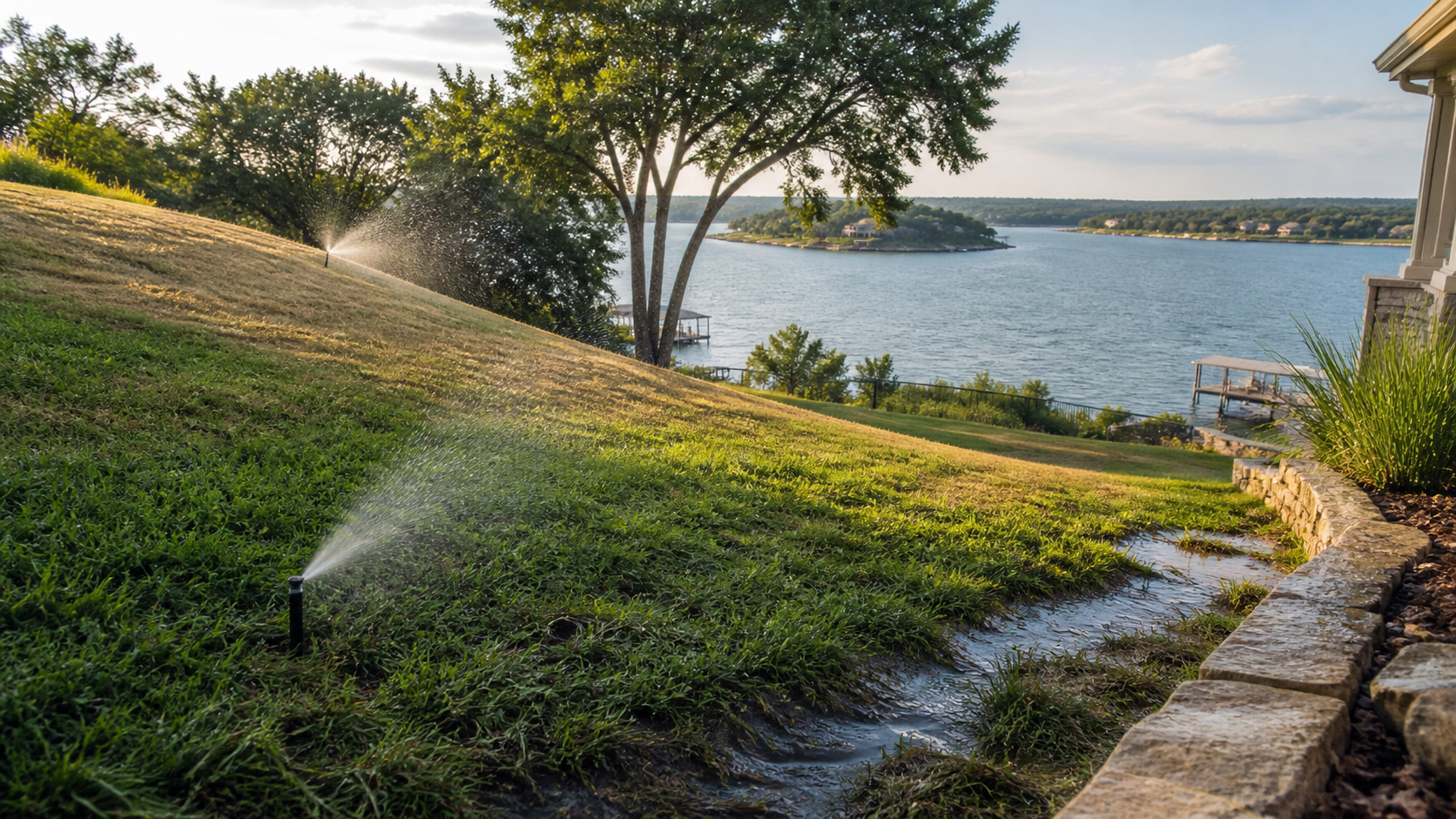
Runoff during watering can come from too much water too quickly, poor head adjustment, compacted soil, mismatched nozzles, or a break that sends more water than the turf can absorb. If runoff appears only after the zone shuts off, low-head drainage or a slow valve leak may be more likely.
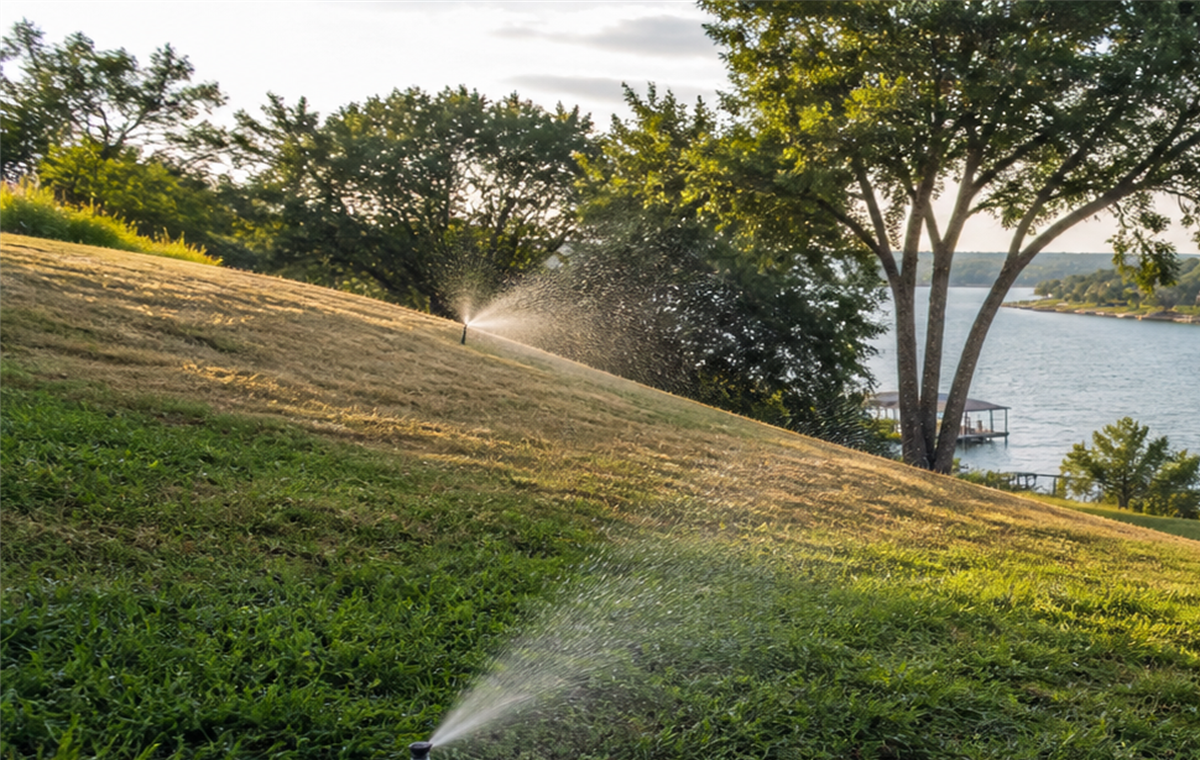
The high side of a sloped yard may dry first because pressure and coverage are harder to balance. Heads at the top may need different nozzles, spacing, or run times than the low side. Replacing one head without checking the zone pattern can leave the same dry edge in place.

Low-head drainage can make the lowest sprinkler head seep after the zone stops. That does not always mean the low head is broken. It can be normal drainage from water left in the lateral line, or it can be made worse by a valve that does not close cleanly. Timing and volume matter.
Lake-area yards may also include stone borders, retaining walls, docks, mature landscaping, or narrow turf strips. These features can block spray, create runoff paths, or hide wet areas until the soil is already saturated. A repair check should follow both the sprinkler pattern and the way water moves across the property.
Homeowners can help by watching one complete cycle. Note which heads rise first, which areas stay dry, where water leaves the lawn, and whether water continues after shutoff. A short phone video can be useful because the symptom may disappear before the repair visit.
The repair goal is controlled coverage, not simply more water. A slope often needs cycle-and-soak scheduling, nozzle changes, head adjustment, leak repair, or valve work. The right fix depends on whether the problem is pressure, drainage, broken parts, or watering schedule.