Homeowners around Hood County need clear routing by location before a callback. Granbury may produce the highest search volume, but surrounding communities still need practical sprinkler repair help when the issue, neighborhood, and contractor coverage line up.
City lots often have smaller zones, tighter sidewalks, and more overspray complaints. Larger properties may have longer pipe runs, mixed rotor and spray zones, and more pressure variation. Lake-area homes may have mature landscaping, slopes, erosion, or irrigation layouts that were changed over time. Rural properties may have different water sources or longer travel considerations.
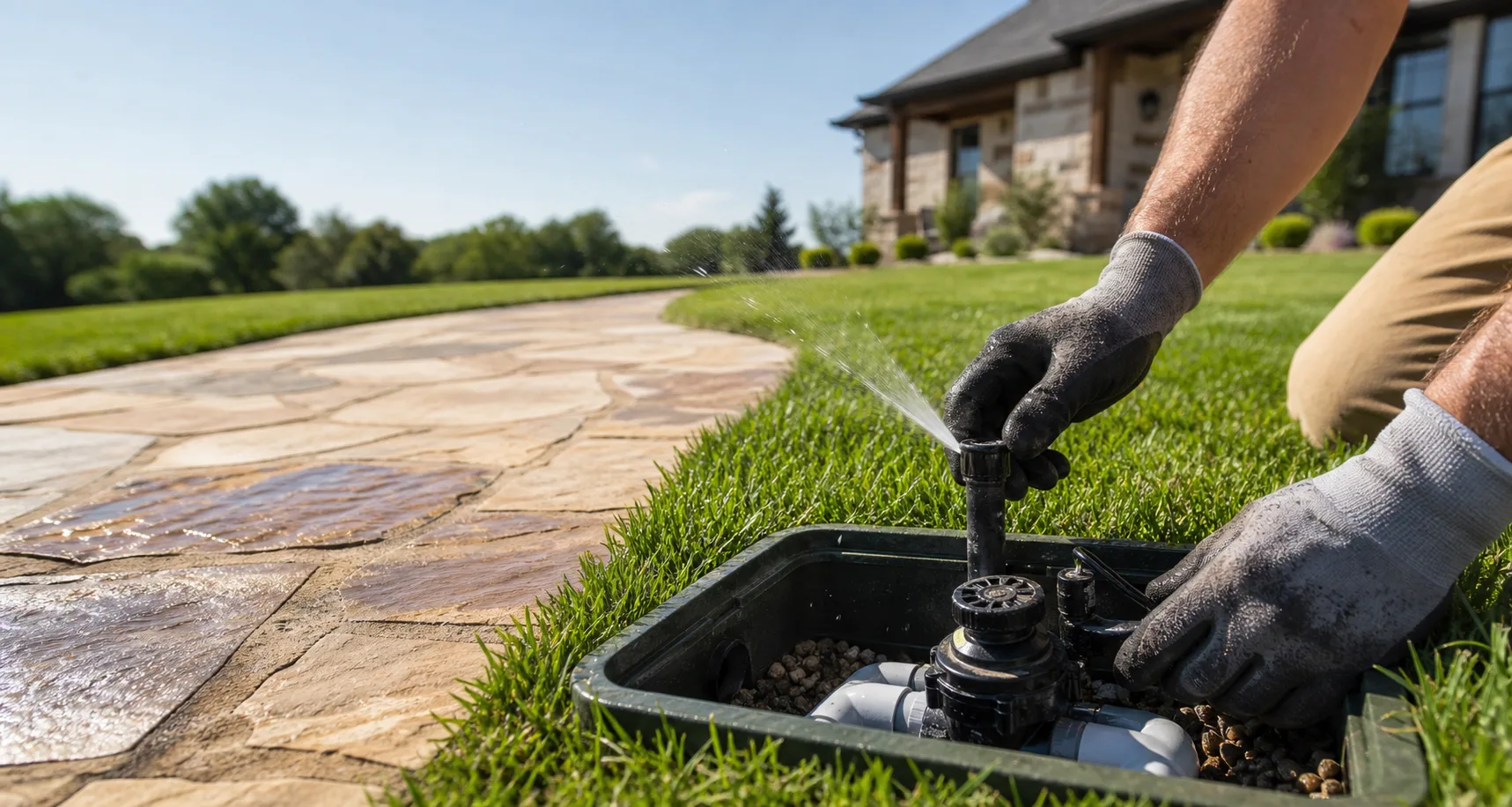
The same symptom can mean different work depending on the location and system. A dry patch in a compact subdivision may be a clogged nozzle. A dry patch at the far end of a large property may be pressure loss, a long run, a valve issue, or a line leak. A valve box full of water may be a simple fitting leak or part of a broader drainage problem.
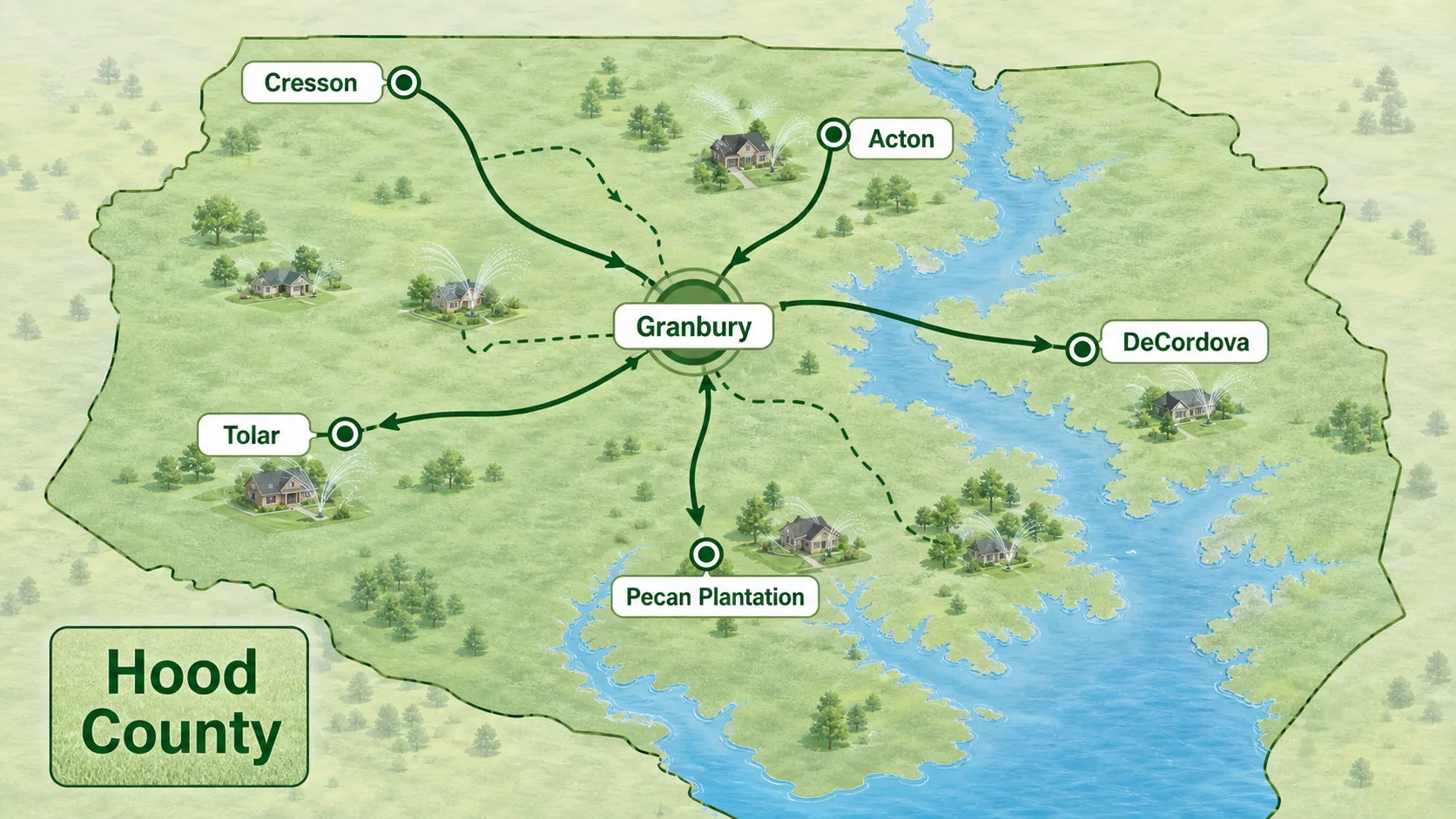
Service requests should include the town or neighborhood, nearest major area, best callback number, and a short description of the problem. Photos can help later, but even simple notes like "Pecan Plantation," "Acton side," or "near DeCordova" can help match the request to someone who actually covers the area.
The strongest local coverage starts with Granbury and Pecan Plantation, then expands into supporting Hood County communities where there is both homeowner demand and qualified contractor coverage. Service claims need to stay accurate so homeowners do not waste time requesting help where no contractor is available.
Local search pages should also match how people actually describe their location. Some homeowners search by city, some by neighborhood, and some by county. A useful service-area page gives Google and the visitor enough context to understand the coverage area without stuffing every nearby place name into every paragraph.
Service-area quality matters because drive time affects scheduling. A request in Granbury may be easy to schedule. A request farther out may still be workable, but only if the contractor covers that route. Capturing the city or neighborhood helps set the right expectation before the callback.
As local demand becomes clearer, separate DeCordova, Acton, Tolar, or Cresson guides can be useful when contractor coverage is realistic. Strong local guides include specific examples, visuals, FAQs, and routing notes so homeowners get real local context instead of repeated city-name swaps.
For homeowners, the practical step is to describe the sprinkler problem and the exact service area. Clear location details help avoid wasted callbacks and make it easier to route requests that can realistically be serviced.